If you have had the good fortune to have been to Rome and you visited the Villa Borghese, you have undoubtedly seen Bernini’s famous sculpture of Daphne, pursued by Apollo, at the moment of her transformation into a tree. She is fleeing Apollo’s predation and has prayed to her father, a river god, who responded with this magic to protect her, not realizing that it was overkill and that giving her a branch with which to whack the sun-god upside the head might have been a better idea. Instead, there she is, light on her feet, in motion, but her toes have begun sprouting roots and bark is starting to encase her legs; her fingers and hair are turning to leaves, and her face discloses her fear, her relief, and the surprised realization that her prayer has gone terribly wrong.
I sometimes think about that sculpture when I am feeling particularly immobile, like I have been over the past month. Tree-like. I know that movement and action are demanded of me, but here I am. I read the news, I get the WhatsApp alerts, I get invitations to show up at rallies and marches. Or I get to midweek and think ahead to a Friday sermon and what people might want to hear from me – and I feel immobile, my momentum arrested. My arms too heavy to lift, my thoughts too heavy to lift, my words slow and wooden, bark impeding my usual bite.
It is with this tree-like heaviness that I arrive tonight, on the eve of Tu Bishvat, the New Year of the Trees. This is an old holiday, originally not a holiday at all, but the biblical-era deadline for paying tithes on one’s fruit trees. So maybe more like April 15th tax day, if April 15th were to go rogue and evolve into a holiday celebrating, I don’t know, income, or math, or loopholes.
By the Middle Ages, long after there was any Jewish government to pay tithes to, Tu Bishvat had evolved into a holiday celebrating the trees themselves and the fruits they give us. The kinds of fruits were already being seen metaphorically – how do some of us have hard shells but soft innards? How do some of us have outward sweetness but inedible stones inside? By the 16th Century, a Tu Bishvat seder was already being practiced in the north of Israel, using the slow, mindful eating of various fruits and nuts and wine as a means of achieving a transcendent experience, in an effort to draw down blessing for humanity and the world itself.
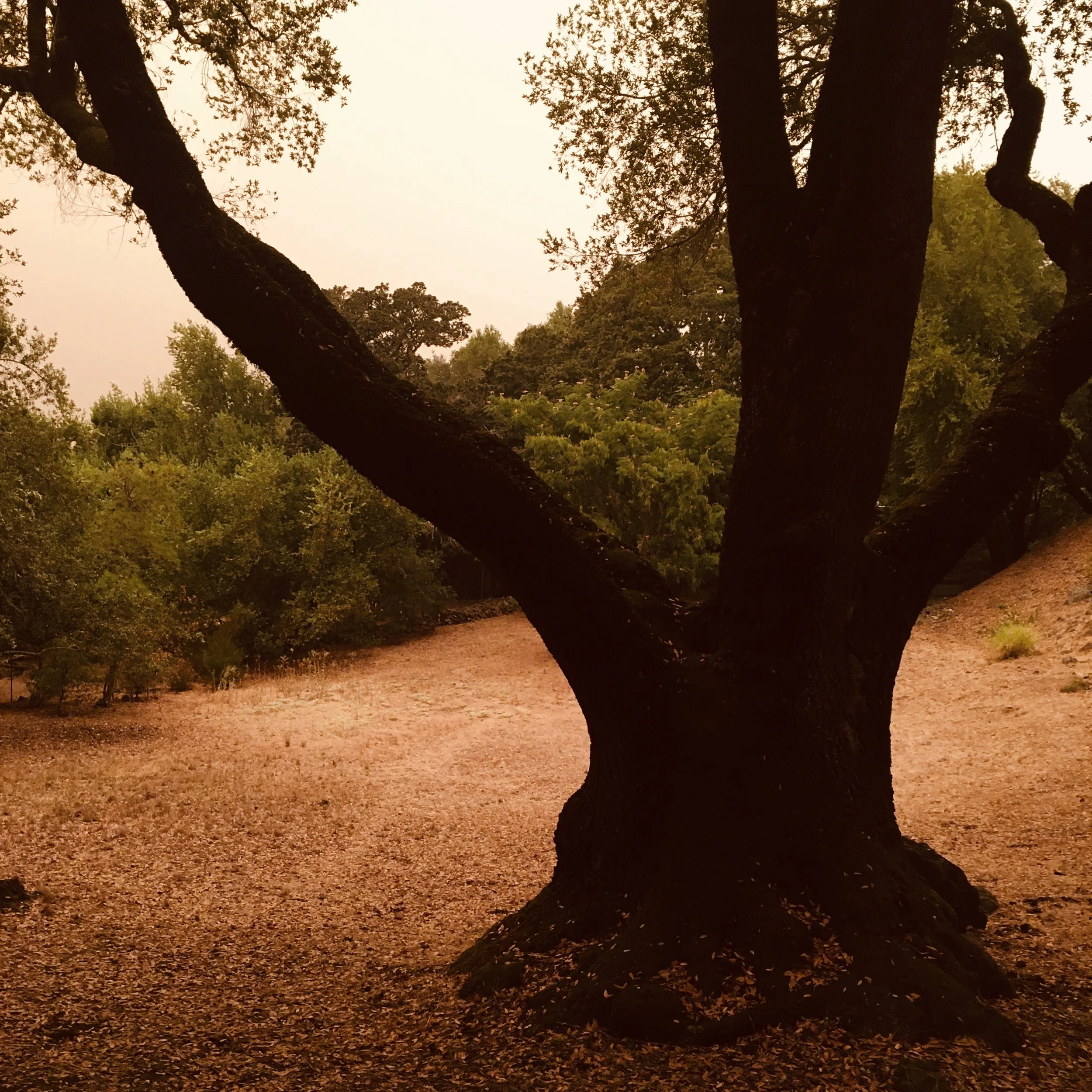
For me, Tu Bishvat is an invitation to be in communication with the more-than-human world. To listen to the voices of the trees, that we now know are actively communicating with each other. What would it feel like to communicate in those ways? To communicate directly through our roots and not through our superficial, jabbering mouths? What would it feel like to have a kind of consciousness so different from human consciousness? Fierce, protective, but also patient. How must we seem to the trees, in our unrootedness, like tumbleweed I suppose, never standing still long enough for a good chat or the transmission of a good nugget of earthy truth.
Maybe Tu Bishvat is the right time to follow in the path of Rebbe Nachman of Bratzlav, who would go into the fields and the forests. He would sit in silence and listen to the song of the grass and the voice of the tree. And he would send his disciples out to the forest to speak to the trees, to pour out their hearts in Yiddish, which apparently trees understand, at least as well as any other human language. Maybe Tu Bishvat is a time to get back into conversation with the trees and realign with the rhythms of the earth. To feel our souls rooting in the deep, even as we sit in folding chairs in the meeting hall at Enso Village.
The 19th Century Chortkover Rebbe says that what Tu Bishvat has to teach us is this: that we may at times feel inert, our souls wooden and immobile. But even in the cold of winter, at some point the sap begins to rise, reviving us, causing us – whether we will it or not – to begin to push forth new leaves, new blossoms, new fragrance and fruit. It is the rhythm of the Universe; it is the rhythm of our souls; and the trees, in their patience, remind us of this. We don’t need to be in motion at every moment. We will almost inevitably emerge from our winter sleep and find ourselves with new vitality.
I think of Daphne again. Becoming a laurel was her destiny but not her doom. Her metamorphosis is not the end of her story. She goes from being a human fleeing to a tree standing firm, rooting deep, sprouting powerfully fragrant leaves that season soups and nourish the sick and the cold and the farm-to-table foodies. Her leaves are woven into a crown that inspires humans to excel.
So yes, I enter this Tu Bishvat tree-like: heavy and slow of speech. But Tu Bishvat reminds me to have patience. My sap will rise again. And I will be ready to bring forth new fruit – to sustain the hungry, to sweeten the bitter, or to hurl at whatever self-proclaimed deity should dare to pursue.
