Tonight, in the second week of our annual Torah cycle, we read the portion called Noah.
And yes, it is that story, the one we all know. The flood, the ark, the rainbow. A story that has gotten retold in movies, jokes, and children’s books. We have made toys and pajamas and menorahs from the image of the ark, stuffed with cute animals, smiling giraffes literally sticking their necks out.
All the cuteness sits atop a story that is actually rather unsettling. Some kind of environmental catastrophe, if we are to read the tale as a trace memory of some historical event. A catastrophe in which so many people died that in the retelling it became the whole world. And in the context of a theology in which there is one God who brings life and death, and who is just, the only available cause of the disaster is human behavior. In another tradition, we could pin the disaster on gods fighting with each other, with humans caught in the crosshairs. But not in our Torah theology. If God destroys, humanity must be the reason.
And that, frankly, is not hard to believe. Because we are living in an era in which human conduct is so often incomprehensible and indefensible. The Noah story says that human evil was constant:
כָּל־יֵ֙צֶר֙ מַחְשְׁבֹ֣ת לִבּ֔וֹ רַ֥ק רַ֖ע כָּל־הַיּֽוֹם
Every human thought, every human plan, was just plain evil, 24/7.
And so it often feels to us. We are exhausted from human evil. We humans shed blood all the time. We extract from the earth. We create computer-based imitation of human intelligence because it is attractive and persuasive and cheap, and has no moral misgivings about the uses to which it is put. And underlying all these acts is an insatiable greed that is so opposite the generosity that so many of us desire and experience in each other.
How are we often so lovely individually and so terrible as a civilization? Our life on earth leaves in its wake a body count of cultures and species and habitats. It is hard to imagine the ancient mythic population in the Noah story doing any worse than we have done with this planet. And it probably would not strike us as odd or undeserved if the Earth rose up in protest as it did in Noah’s time, trying to rid itself of the human irritant.
Even in how Torah tells the story, there is a quality of nature itself rising up. Yes, God made it rain for 40 days and 40 nights, and that can mess you up pretty bad. But the rain alone didn’t make the Flood. At the same moment that the gates of the Heavens open, Torah says (Gen. 7:11): “All the fountains of the Deep burst apart.” The Fountains of the Deep. Ma’ayonot Tehom.
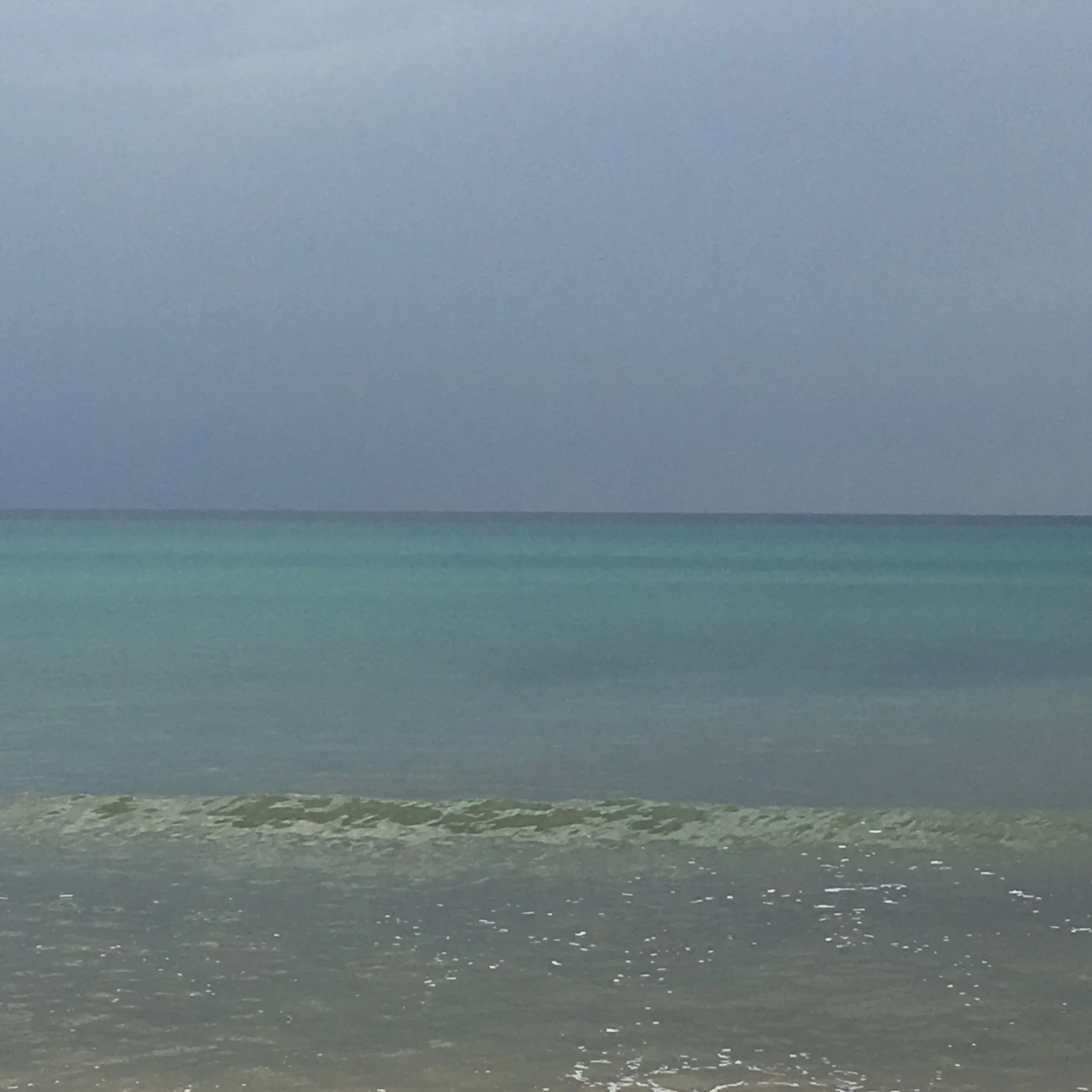
I want to take moment with this idea. Because what is this Deep that in Hebrew we call Tehom? It is different from rainwater. From groundwater. From rivers. From Cotati Creek. It is different from the ocean. It is a Cosmic Ocean. Primordial, mythic, and one of the core elements of Creation. In the very second verse of Torah we learn: “the earth was void and without form, and darkness was over the Deep – choshekh al p’nei tehom – and God’s breath fluttered on the surface of the water.”
The Deep, the Tehom, was already there before God said, “Let there be light.” It was one of the raw materials of Creation, with an ancient, maybe infinitely ancient history which we are not part of and are not privy to.
Our Hebrew word Tehom is the cognate of the name of the Babylonian goddess, Tiamat. In Babylonian mythology, Tiamat is the Deep, the Cosmic Ocean. She births the pantheon of gods who then rise up and kill her consort. She wreaks revenge on that generation of deities by bringing forth monsters to wage battle. After much destruction, the god Marduk slices her in half, creating the vault of heaven and earth, much as on the second day of our own indigenous story, God divides the waters to make space for Creation.
When Torah says the fountains of Tehom burst forth, it perhaps sounds mechanical to our ears. A plumbing issue. But to our ancient Semitic ancestors, who would have had whispering of the myth of Tiamat, it would have sounded not mechanical but mythic – the act of an avenging goddess, the primordial waters returned to wash the slate clean; the Deep, taking back its own.
And all that is terrifying.
But where the Babylonian myth involves a battle with the Deep waters that ultimately are conquered, making space for Creation, our story has a twist. And that is the ark itself. Noah’s ark. Our Torah story could have been that humanity was destroyed, period. And then a second humanity was brought into existence to be better than those first ones created.
Instead, ours is a story of survival and continuity. We survive to try again. We build a means of staying afloat. In it is the DNA blueprint for renewal. The genes of all the animals. A time capsule sent into the future in the form of a vessel floating right atop the destroying waters. Isolated, with no landmarks. But still, a story of humanity getting a second chance.
So what does our second chance look like? What is the ark we are building in this frightening time? What is it made of? How do we make it spacious and inviting for everyone? What are we stocking it with, what seeds for planting on the other side? What is the blueprint for renewal that we want to bring with us into our floating vessel?
I’m of course not suggesting we build physical boats or even, necessarily, that we should be expecting any specific physical disaster, although ongoing human insult to nature does make climate disaster feel possible if not inevitable.
But what are the arks of refuge we can build, through community, and through our mechanisms of resilience? How do we fill them with eager, self-propagating seeds of culture and wisdom? What is the art we bring aboard? What is the music? What are the wisdom stories? What are the compassion teachings? What are the lessons in humility and stewardship? There is room for all of this on our ark if we make it and we stock it.
So in our moments of fear, when we dread the terrible human behavior we see, and the consequences that might arise from it, let us also remember that we are buoyant. And we are builders. We can take our hammers and our nails, tar and pitch, and construct something that will float and will last and will convey to future generations all that we care about. Let us work on building this ark now, and not wait for a rainy day.
