Take comfort, take comfort, people. This is Shabbat Nachamu.
It is the Shabbat the follows our grief-drenched holiday of Tisha B’Av, where we mourn the destruction of the Temple in Jerusalem in 586 BCE and again in 70 CE.
As I said the other night as 14 of us gathered to chant lamentations outside the Shea Federal Building in Santa Rosa, this holiday has special resonance and stickiness to it, I think. It has resonance and stickiness because the destructions of those times are also evocative of what we are seeing in our time.
Our ancient Temple was not just a building, and it was not just the sum total of the sacrifices and songs and rituals that happened inside it. For our ancient ancestors, the Temple represented a way of organizing and understanding themselves: their identity, their relationship with God, the service they offered and the blessings they received. The Temple represented the faith in a system, an ecosystem, of Divine-Human connection.
This was not a secret. The destruction of the Temple wasn’t just intended to bring down a building. It was aimed at this spiritual ecosystem. It was an injury to identity, to the spiritual wholeness of the people. The wound went deeper than physical rubble.
The day of mourning called Tisha B’Av, or the 9th day of Av, was one of the souvenirs we brought with us into Exile, into Diaspora. A container to hold our overflowing grief, and through which to pass down that grief to our children in a meaningful but measured way.
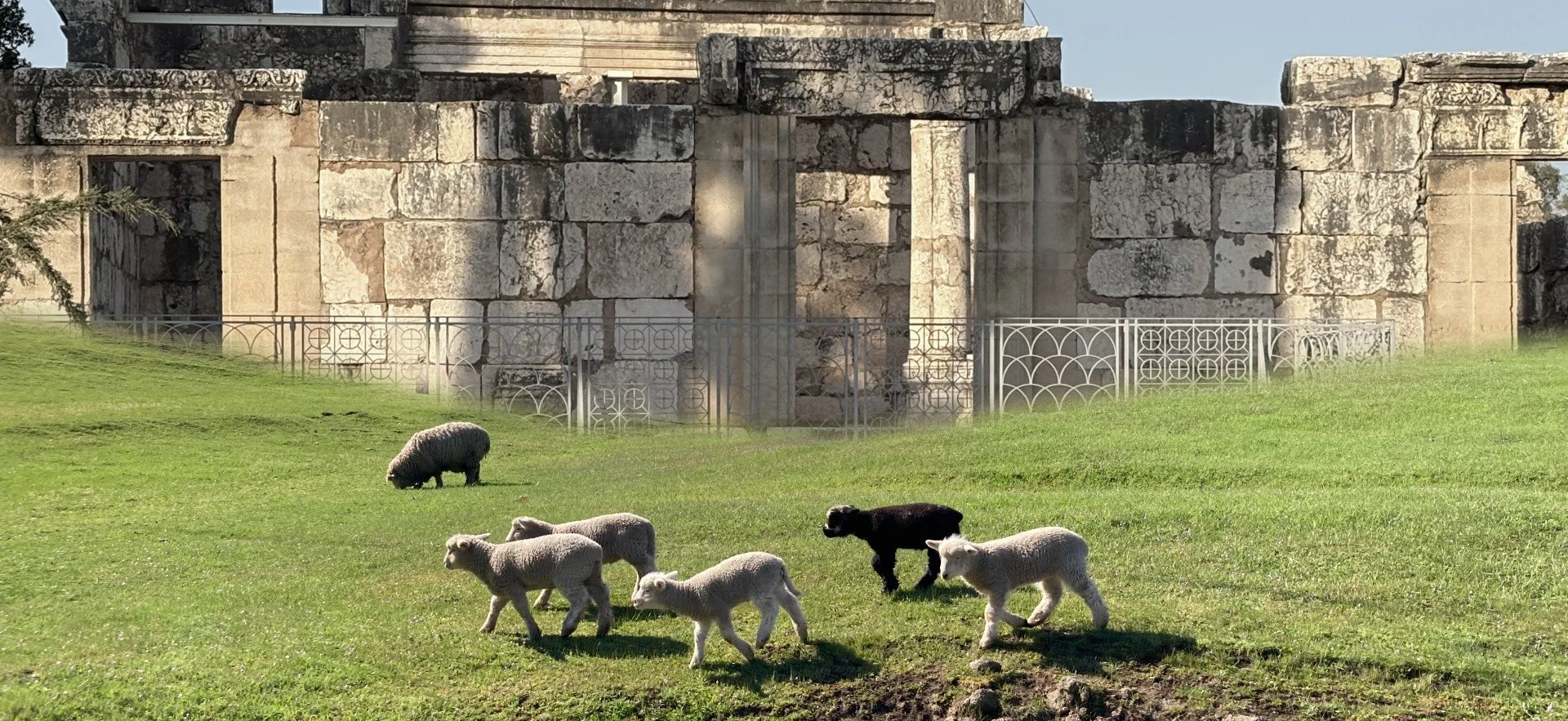
And so for 2000 years we’ve done this gathering and wailing. Every year we dwell in a daylong dose of lament. But then, suddenly we are offered comfort! We find ourselves immediately in Shabbat Nachamu, the Shabbat of Comfort, in which we read as our haftarah Chapter 40 of the Book of Isaiah. The chapter from Isaiah is a prophecy of restoration; a prophecy that is almost a direct response to the Book of Lamentations. A restored time is coming, like a voice in the wilderness. The Divine Reign will return. Jerusalem will be tended to. Heralds will be sent out in joy. God will gather the people like a shepherd collecting lost lambs.
The imagery is traditional, of course. This is our mythic memory. Our ancient theology. There is likely nothing in Isaiah 40 that any of us would believe in in any literal way. But there is something underneath the words – and that is hope. That even after tragedy, after life-changing tragedy, there is still a possibility of joy and blessing ahead. That even conquerors and despots will fall, and something of value will outlive them.
The words of Isaiah want us to be comforted. The chapter opens with the famous phrase nachamu nachamu ami. “Take comfort, take comfort my people.”
It is memorable in part because of the repetition of the opening word nachamu. In our Torah, in which our ancestors believed that nothing is superfluous, why the repetition of the word? Nachamu ami would have been enough. “Take comfort my people.”
We do tend to remember the places in Torah where a word is said twice in succession. Those spots grab our attention. Even folks who are not Torah scholars or Hebrew speakers will remember that in Leviticus it says, tzedek tzedek tirdof. “Justice, justice shall you pursue.” Why the repetition? Just to be emphatic maybe. “Justice – really, justice.” Or does each iteration of tzedek refer to a different aspect of justice? Or maybe it’s to indicate “every kind of justice.” (See David Zev Moster, “Repetition Repetition”).
In Exodus, in a phrase that we sing over and over leading up to and through the High Holy Days, we say, Adonai Adonai El Rachum v’Chanun. “Adonai, Adonai, the merciful and gracious,” which is the opening of the litany we have come to call the Thirteen Attributes of Mercy. What does it mean to repeat God’s name here? It couldn’t be just so that the Divine Name takes up two of the 13 slots. Some suggest these are the same word but represent different experiences of the Divine Presence – the experience of it before we sin and the experience after we sin. In this verse that comes up over and during our season of repentance, maybe it is important to remember both faces of that relationship, just as in a marriage you need to know who your and your partner are when everything is hunky-dory and who you are when one or both of you messes up. Both faces of the relationship need to be known and tended to.
We have a couple other famous moments of repetition in Torah. We remember the urgency conveyed by repetition when Abraham lifts a knife to sacrifice Isaac and in that climactic moment, an angel calls out Avraham Avraham. And ten generations later, when Moses turns aside to observe a burning bush, God calls out to him from inside the bush saying, Moshe Moshe.
I think these last two, are oddly the most significant for our understanding the repetition of nachamu nachamu in Isaiah’s prophecy. Sometimes you have to say it twice. When it’s not expected, when the listener is lost in their own thoughts. Avraham! says the angel just to startle him. Avraham, the angel continues, so that Abraham, having been roused from the dark cloud of what he was about to do, can now understands that the message is really for him.
And so our ancestors, in their dark cloud of grief after the destruction of the Temple, could not easily extract themselves from it. Perhaps they couldn’t hear words of comfort. Sometimes grief is too big and too immediate. Or they didn’t feel they deserved comfort. Maybe the spiritual ecosystem of the Temple had already been fully replaced with a spiritual ecosystem of ruin.
Nachamu – “take comfort,” says God, knowing the people can’t quite hear it. But the noise of the word rouses them and then when it is repeated their ears are ready for it. Much like how we sometimes repeat a poem here at Ner Shalom because when it is first being read, we don’t yet have on our poetry ears. So our ancestors might not have easily put on their prophecy ears, or the ears that could hear words of compassion, words that could command self-compassion.
When we gathered for Tisha B’Av Wednesday at the Federal Building, we articulated our own laments. We named not only the physical threats that so many people are experiencing right now, but we gave voice to the harm inflicted on our spirits. The wrecking of structures that we have relied on; edifices of democracy and of kindness. And we noted the sense of vulnerability and helplessness that so many of us feel more every day.
We are living through and with spiritual damage now. The Jewish wisdom of Tisha B’Av reminds us to take the time and space to let ourselves simply lament. But then Jewish wisdom takes another step and reminds us to take comfort.
For those of us caught up in the moral injury of this moment, engaging in organizing and protest, or weighted down by sadness, or immobilized by doomscrolling, it might not seem like this is a moment to experience comfort. How can we allow ourselves comfort when there is so much work to do, when so much hangs in the balance, and when despair is so much stickier?
But nachamu nachamu is insistent. “Be comforted, be comforted.” Maybe the first nachamu is the one we quickly dismiss. “Pshaw! There is no time for comfort.” And then comes the second nachamu, the one that says, “No, really. Be comforted. There is good in this world. People taking care of each other. People trying their best. Teaching their children kindness. Making art and music and poetry to strengthen our hearts. And there is still sky above and land below and water beneath that, and life of every sort teeming within it all. Nachamu! Really, nachamu. You must let the good and the beautiful comfort you. The job of repair, of rebuilding from the ruins, can only be done if you hold lament and comfort together. Otherwise you build an edifice of bitterness, if you succeed in building at all. Conquerors and despots will fall. And remember and take comfort that something of value will outlive them.”
נַחֲמ֥וּ נַחֲמ֖וּ עַמִּ֑י יֹאמַ֖ר אֱלֹהֵיכֶֽם׃
Comfort, oh comfort My people, says your God.
Chant setting by Rabbi Shefa Gold.
